🎁 Current offers
Prices are updated from the Offers page · Details and number of sessions are set after assessment
🔔 Track your sessions and appointments online through your personal account
Track my sessions →How does laser work?
Laser sends light pulses that target the pigment in the hair follicle, which helps weaken hair growth gradually over repeated sessions.
Areas that can be treated
- Face: upper lip, chin, sides of the face
- Upper body: underarms, arms, hands
- Lower body: legs, thighs, feet
- Sensitive areas: based on an appropriate assessment of each case
Benefits of laser
- Significant reduction in hair growth
- Fewer ingrown hairs and less irritation
- Long-term results
- Large areas can be treated
Number of sessions needed
Usually 6 to 8 sessions initially; the number depends on skin tone, hair color, hair density and the treated area.
Does laser hurt?
The sensation varies from person to person and is often described as a light prickling or mild warmth. Modern devices have cooling systems for added comfort.
Before and after session instructions
Before the session
- Avoid waxing or plucking
- Shave the area before your appointment
- Avoid intense sun exposure
After the session
- Use the prescribed creams
- Avoid high heat for a short period
- Use sunscreen on exposed areas
- Keep to your scheduled appointments
Illustrative examples
Before / after gallery
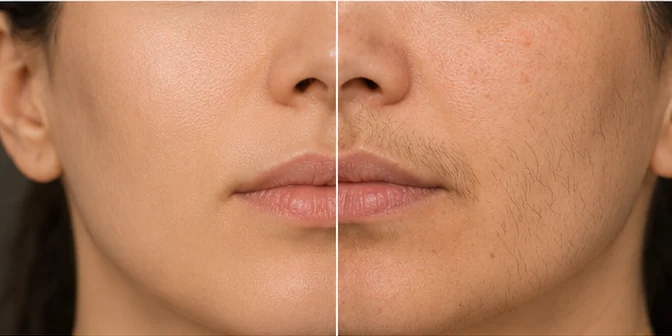 Before
After
Laser hair removal
The images above are AI-generated illustrations intended to convey the idea of the procedure and do not represent actual cases from the complex. Results vary from person to person and are determined after a medical assessment.
Frequently asked questions
Related services
Book your consultation now
Our medical team at Dar Al Inayah is ready to help — a consultation and assessment of your case